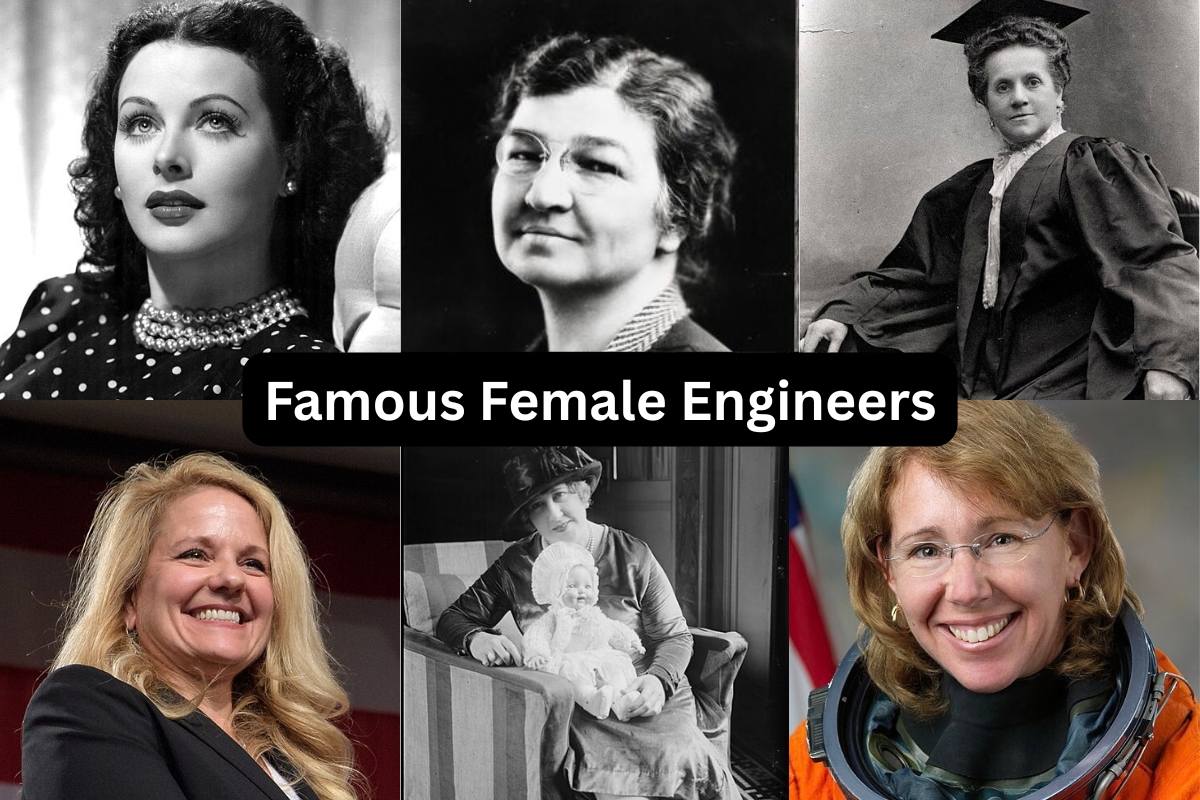
Throughout history, women engineers and inventors have helped transform transportation, electricity, manufacturing, computing, aerospace, and countless other fields.
Many worked at times when engineering education and professional opportunities were largely closed to women, yet their ideas and achievements had lasting effects.
From Edith Clarke’s pioneering work in electrical power systems to modern aerospace leaders such as Gwynne Shotwell, these women demonstrate the wide range of contributions women have made to engineering and technology.
Famous Female Engineers
1. Edith Clarke (1883–1959)
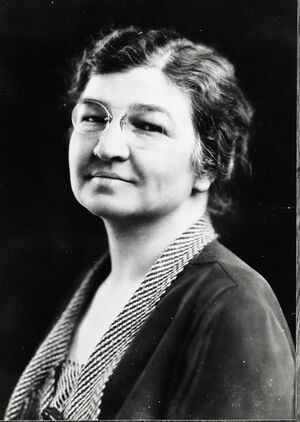
Edith Clarke was an American electrical engineer who became one of the most important early women in her profession.
After initially working as a teacher and computer—a person who performed mathematical calculations—she studied electrical engineering at the Massachusetts Institute of Technology. In 1919, she became the first woman to earn a master’s degree in electrical engineering from MIT.
Clarke specialized in the analysis of electrical power systems. She developed the Clarke calculator, a graphical device that helped engineers solve equations associated with long-distance electrical transmission lines.
Her work made complicated calculations faster and contributed to the development of increasingly large and interconnected electrical grids.
She later became the first woman to teach engineering at the University of Texas at Austin. Clarke’s career helped establish a path for women in electrical engineering while her technical work contributed to the development of modern power engineering.
2. Emily Warren Roebling (1843–1903)
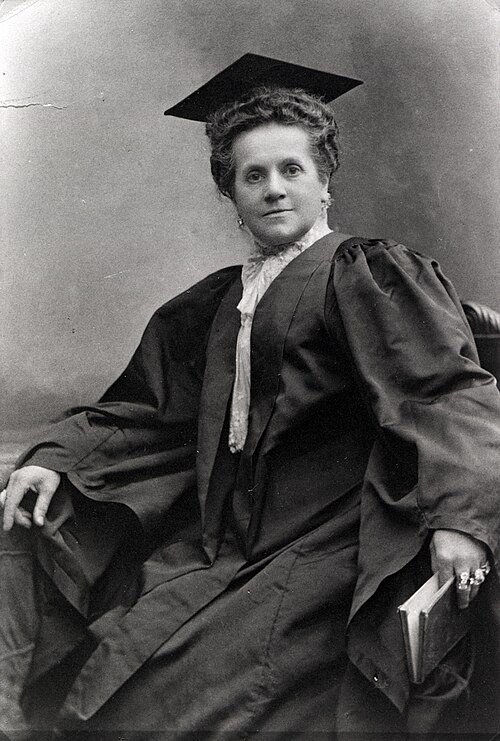
Emily Warren Roebling played a central role in the completion of the Brooklyn Bridge, one of the greatest engineering projects of the 19th century.
The bridge was originally designed by her father-in-law, John A. Roebling, with her husband, Washington Roebling, taking over as chief engineer following John’s death.
When Washington became seriously ill from decompression sickness associated with work on the bridge’s foundations, Emily became the main link between him and the engineers working on the project.
For more than a decade, Roebling assisted with the management and technical coordination of the project. When the Brooklyn Bridge opened in 1883, she was reportedly the first person to cross it in a carriage.
Although she did not hold the formal title of engineer, her contribution to the bridge’s completion has become an important part of engineering history.
3. Hedy Lamarr (1914–2000)

Hedy Lamarr is best remembered as a Hollywood actress, but she was also an inventor whose technological ideas became significant long after they were developed.
During World War II, Lamarr worked with composer and inventor George Antheil on a communications system designed to make radio-controlled torpedoes more difficult for enemies to jam.
Their invention used a technique in which radio signals could rapidly change between different frequencies. Lamarr and Antheil received a U.S. patent for their frequency-hopping communication system in 1942.
The specific system they patented was not adopted by the U.S. Navy during the war, but frequency-hopping and spread-spectrum concepts later became important in secure wireless communications.
4. Lillian Moller Gilbreth (1878–1972)
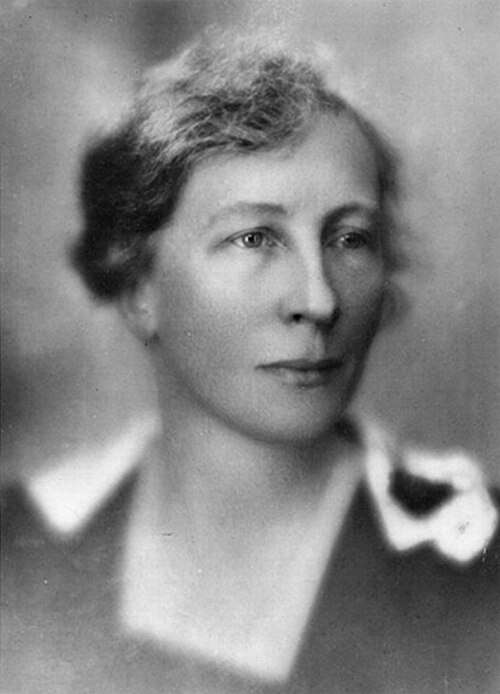
Lillian Moller Gilbreth was an American industrial engineer, psychologist, and management expert who helped transform the study of workplace efficiency. Together with her husband, Frank Bunker Gilbreth, she examined how workers performed physical tasks and looked for ways to reduce unnecessary movements.
The Gilbreths became leading figures in time-and-motion studies. Rather than simply attempting to make employees work faster, Lillian became particularly interested in reducing fatigue and adapting workplaces to human needs.
Her combination of psychology and engineering helped lay foundations for modern ergonomics and human-factors engineering.
Gilbreth also applied these ideas to household design and consumer products. Her work influenced the arrangement of kitchens, appliances, office environments, and industrial workplaces. She became one of the best-known women in early industrial engineering and demonstrated how engineering principles could be used to improve everyday life.
5. Sarah Guppy (1770–1852)
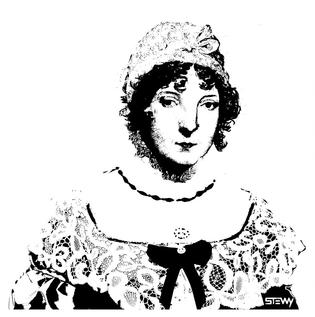
Sarah Guppy was a British inventor whose work covered engineering, infrastructure, household technology, and mechanical devices. Living during the Industrial Revolution, she developed ideas at a time when women had very limited opportunities to participate formally in engineering.
In 1811, Guppy patented a method related to the construction of bridges and their foundations. Her design proposed techniques intended to improve the stability of suspension bridges. She was acquainted with prominent engineers of the period, including members of the Brunel family, although claims that her invention directly formed the basis of specific Brunel bridges should be treated cautiously.
Guppy obtained several patents during her lifetime and developed inventions ranging from infrastructure concepts to domestic devices. Her career illustrates how women participated in technological innovation even before engineering became a widely accessible profession for them.
6. Beulah Louise Henry (1887–1973)
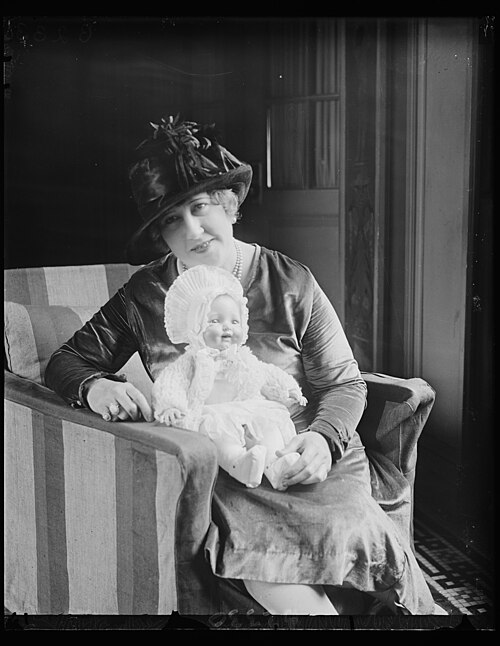
Beulah Louise Henry was an American inventor sometimes nicknamed “Lady Edison” because of the large number of inventions she developed. Unlike many inventors who specialized in a single technical area, Henry worked on an unusually broad range of products.
Among her inventions were improvements to sewing machines, typewriters, toys, umbrellas, household devices, and manufacturing equipment. One of her best-known early creations was a parasol with interchangeable covers, allowing its appearance to be changed without replacing the entire umbrella.
Henry received dozens of U.S. patents and developed many more inventions during her career. She also founded companies and worked as a consultant for manufacturers. Her success was particularly notable during an era when relatively few women were able to establish independent careers as professional inventors.
7. Gwynne Shotwell (1963– )

Gwynne Shotwell is an American aerospace engineer and business executive who has played a major role in the growth of SpaceX. She studied mechanical engineering and applied mathematics at Northwestern University before beginning her career in the aerospace industry.
Shotwell joined SpaceX in 2002, shortly after the company was founded. She became president and chief operating officer and has overseen major areas of the company’s business operations, customer relationships, and expansion. During her tenure, SpaceX developed the Falcon launch vehicles, Dragon spacecraft, reusable rocket systems, and the Starlink satellite network.
Her career represents the increasing presence of women in senior engineering and aerospace leadership positions. Shotwell has become one of the most prominent executives in the commercial space industry and has helped oversee projects that have changed how satellites and astronauts are launched into orbit.
8. Limor Fried (1979– )

Limor Fried is an American electrical engineer, entrepreneur, and advocate for electronics education. She studied electrical engineering and computer science at MIT, where she began developing electronics projects and publishing information about how other people could build them.
In 2005, Fried founded Adafruit Industries, a company specializing in open-source electronic hardware, components, and educational materials. Adafruit has produced development boards, sensors, wearable electronics, and kits designed to make electronics and programming more approachable.
Fried has been particularly influential in the maker movement, which encourages people to build, modify, and experiment with technology themselves. Through tutorials and open-source projects, her work has introduced many students and hobbyists to programming, electronics, and engineering.
9. Anousheh Ansari (1966– )

Anousheh Ansari is an Iranian-American engineer, entrepreneur, and space traveler. After moving to the United States as a young adult, she studied electrical engineering and computer science at George Mason University and later earned a master’s degree in electrical engineering from George Washington University.
Ansari built a successful career in the telecommunications industry and co-founded Telecom Technologies, Inc. She later became involved in initiatives designed to encourage private-sector space exploration and technological innovation.
In 2006, Ansari traveled to the International Space Station, becoming the first Iranian-born person in space and the first Muslim woman to travel to space. Her journey attracted international attention and helped demonstrate the growing role of private individuals and commercial organizations in human spaceflight.
10. Sandra Magnus (1964– )
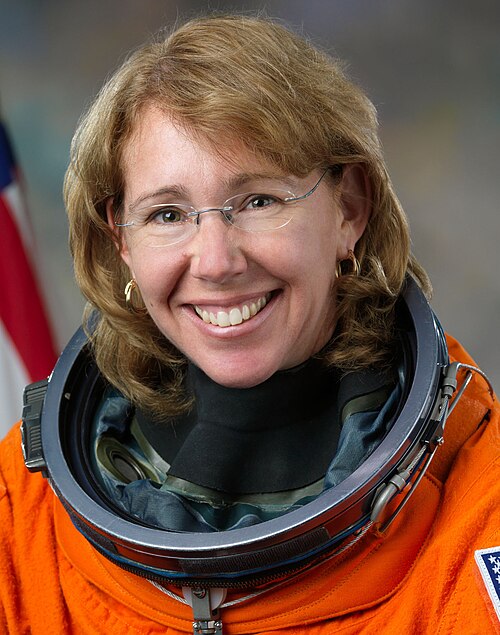
Sandra Magnus is an American engineer and former NASA astronaut whose career combines engineering research with human spaceflight. She earned degrees in physics and electrical engineering before completing a doctorate in materials science and engineering.
Magnus was selected by NASA as an astronaut in 1996. She first traveled into space aboard Space Shuttle Atlantis on the STS-112 mission in 2002. She later became a member of the International Space Station’s Expedition 18 crew, spending more than four months living and working aboard the station.
She returned to space in 2011 aboard Space Shuttle Atlantis for STS-135, the final mission of NASA’s Space Shuttle program. Magnus’s career highlights the close relationship between engineering and space exploration, with her technical training contributing to both scientific research and spacecraft operations.