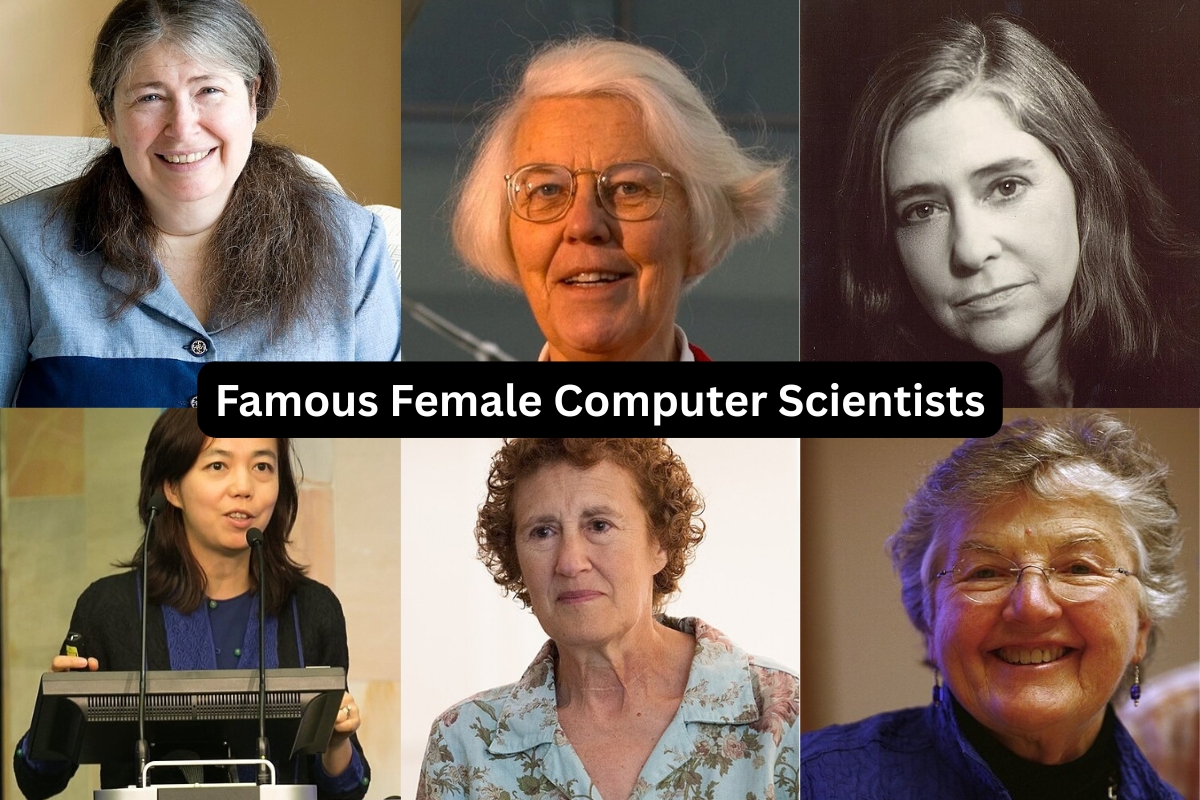
Women have played an important role in computer science since long before modern electronic computers existed.
From early ideas about programming to breakthroughs in software engineering, networking, cryptography, artificial intelligence, and search technology, female computer scientists have helped shape the digital world.
Some, such as Ada Lovelace and Grace Hopper, became famous pioneers of programming, while others made fundamental contributions to technologies that millions of people use every day. Here are 13 of the most famous and influential female computer scientists in history.
Famous Female Computer Scientists
1. Ada Lovelace (1815–1852)
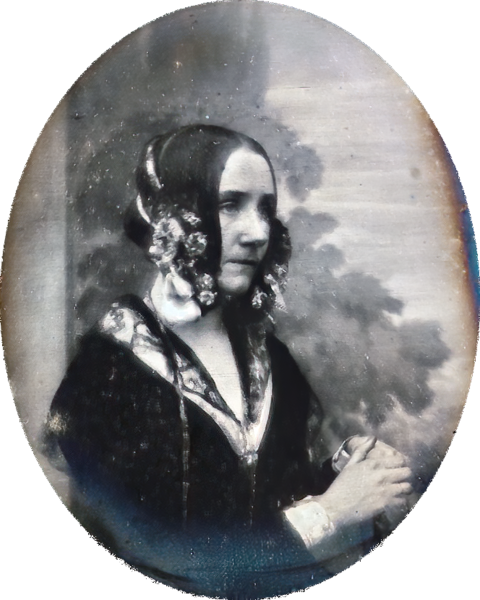
Ada Lovelace was an English mathematician whose work with Charles Babbage’s proposed Analytical Engine earned her an important place in the history of computing. The machine was designed as a mechanical general-purpose computer, although it was never completed during their lifetimes.
In 1843, Lovelace published extensive notes accompanying her translation of an article about the Analytical Engine. Her notes included a method for calculating Bernoulli numbers using the machine, often described as the first published computer algorithm intended for machine execution.
Lovelace also understood that computing machines could potentially manipulate symbols and information rather than simply calculate numbers. This remarkably forward-looking idea has made her one of the most celebrated figures in early computing history.
2. Grace Hopper (1906–1992)
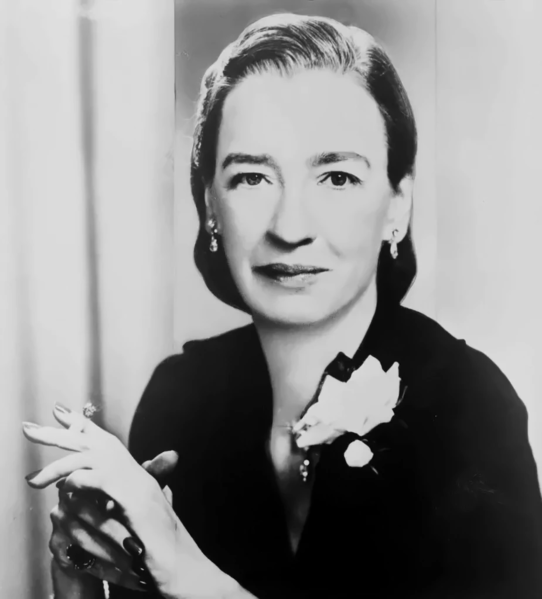
Grace Hopper was an American computer scientist, mathematician, and U.S. Navy officer who helped transform the way people programmed computers.
During World War II, Hopper joined the U.S. Naval Reserve and worked on the Harvard Mark I, one of the earliest large-scale electromechanical computers. She later became a pioneer in the development of compilers, programs that translate more understandable programming instructions into code computers can execute.
Hopper’s work influenced the development of COBOL, one of the earliest widely used programming languages for business applications. She strongly promoted the idea that programming languages should resemble ordinary human language rather than complicated machine instructions.
3. Margaret Hamilton (1936– )
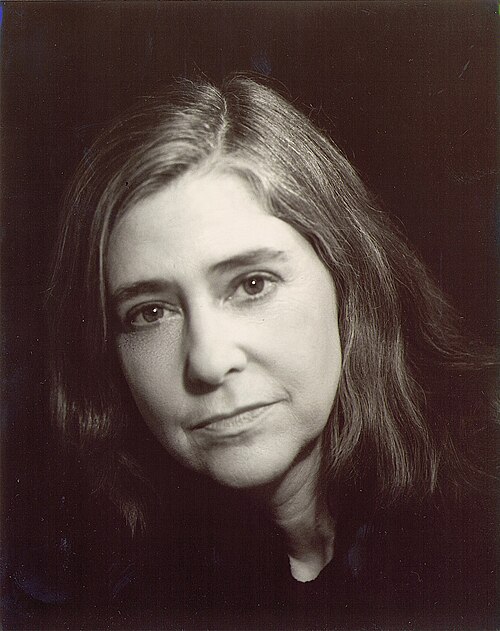
Margaret Hamilton is an American computer scientist and software engineer best known for her work on NASA’s Apollo program.
Hamilton led the software engineering division at MIT’s Instrumentation Laboratory that developed onboard flight software for the Apollo spacecraft. The software had to operate reliably despite the extremely limited computing power available at the time.
Its design proved particularly important during the Apollo 11 Moon landing in 1969, when the computer became overloaded but continued prioritizing essential landing tasks. Hamilton later became an influential advocate for rigorous software development and helped popularize the term software engineering.
4. Barbara Liskov (1939– )
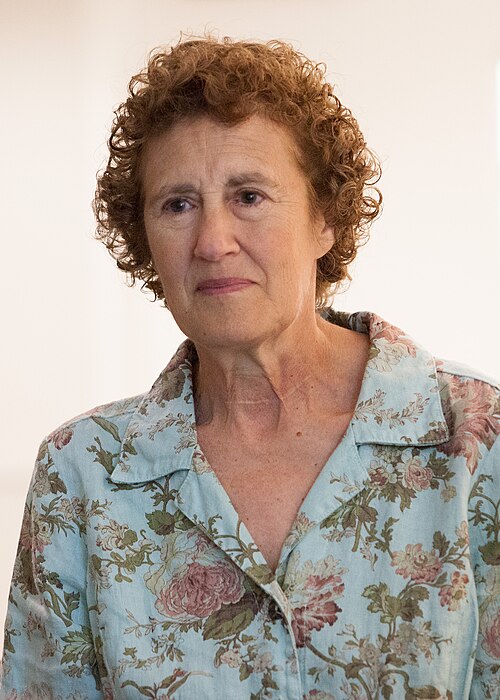
Barbara Liskov is an American computer scientist whose research has significantly influenced modern programming languages and software engineering.
During the 1970s, Liskov led the development of CLU, a programming language that advanced important concepts involving data abstraction and modular programming. Many of these ideas subsequently influenced other programming languages.
She is also closely associated with the Liskov Substitution Principle, an important concept in object-oriented software design. Her research has additionally contributed to distributed systems and fault-tolerant computing. In 2008, she received the prestigious A.M. Turing Award.
5. Frances E. Allen (1932–2020)
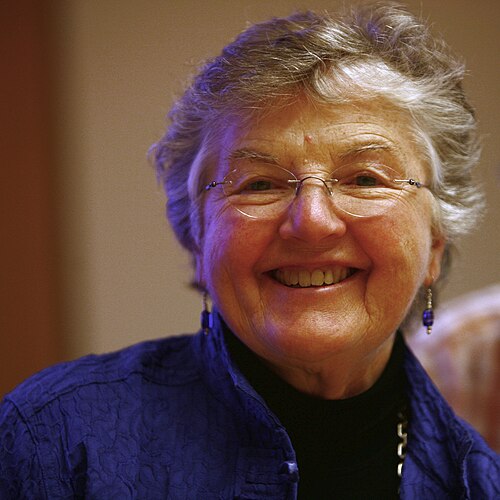
Frances E. Allen was an American computer scientist best known for pioneering research into compiler optimization.
Allen joined IBM in 1957 and originally expected to remain only long enough to repay her student loans. Instead, she spent decades at the company and became an important researcher in high-performance computing.
Her work focused on techniques that allowed compilers to reorganize and optimize programs so they could run more efficiently on computer hardware. In 2006, Allen became the first woman to receive the A.M. Turing Award, one of the highest honors in computer science.
6. Jean E. Sammet (1928–2017)
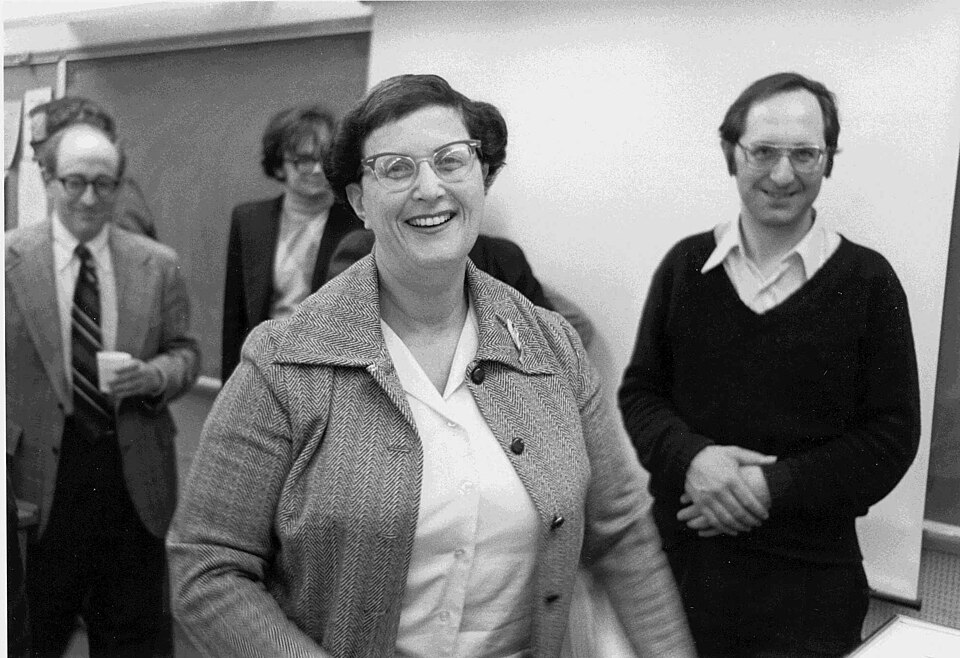
Jean E. Sammet was an American computer scientist who made important contributions to the development and understanding of programming languages.
During the late 1950s, Sammet participated in work connected with COBOL, which became one of the most widely used programming languages for business computing.
She later developed FORMAC while working at IBM. FORMAC was designed for symbolic mathematical manipulation and became an important early language in that area. Sammet also wrote extensively about the history and development of programming languages and served as president of the Association for Computing Machinery.
7. Karen Spärck Jones (1935–2007)
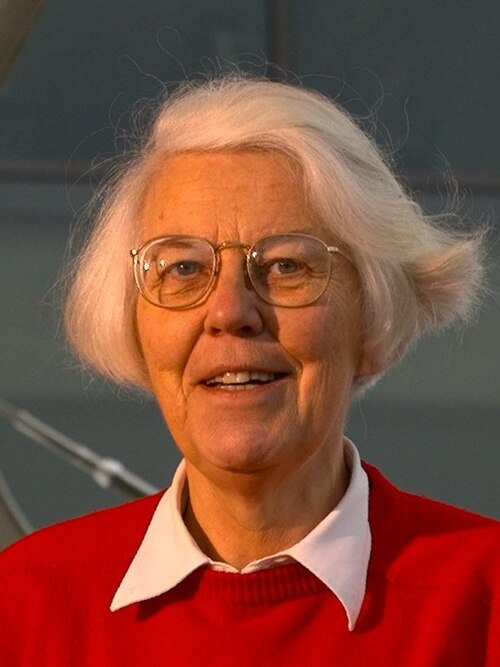
Karen Spärck Jones was a British computer scientist whose research helped establish important foundations for modern search engines and information retrieval.
Her work examined how computers could identify and rank relevant information within large collections of documents. She developed the concept of inverse document frequency, or IDF, which gives greater importance to words that are relatively uncommon within a collection of documents.
IDF became part of the widely used TF-IDF method for ranking documents according to their relevance. Her research influenced information retrieval, natural language processing, and technologies underlying modern web search.
8. Radia Perlman (1951– )

Radia Perlman is an American computer scientist and network engineer whose work helped make large computer networks more reliable and efficient.
While working at Digital Equipment Corporation, Perlman developed the Spanning Tree Protocol (STP). The protocol allowed network bridges to communicate without creating problematic loops that could disrupt network traffic.
Her contributions to networking have sometimes led to her being called the “Mother of the Internet,” although Perlman herself has expressed reservations about the nickname because the internet was created through the work of many people. She has continued contributing to network security and protocol design throughout her career.
9. Adele Goldberg (1945– )
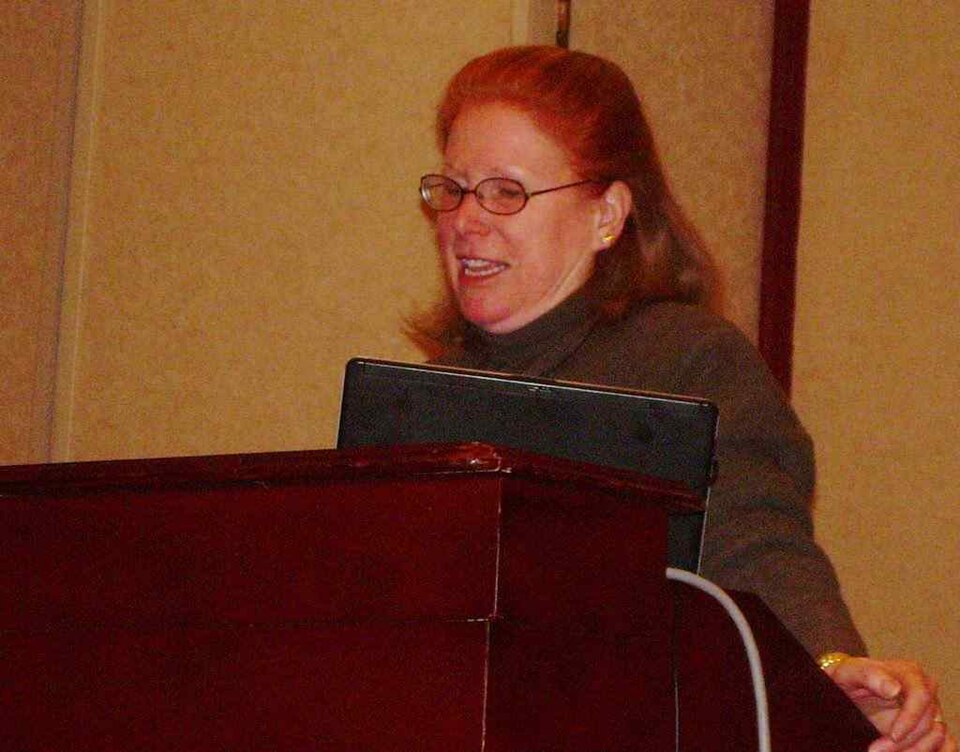
Adele Goldberg is an American computer scientist who played an important role in the development of modern graphical computing.
During the 1970s, Goldberg worked at Xerox PARC, one of the world’s most influential computer research laboratories. She contributed significantly to the development of the Smalltalk programming language and its programming environment.
Smalltalk helped advance object-oriented programming and demonstrated graphical interface concepts involving windows, icons, menus, and user interaction. Ideas explored at Xerox PARC subsequently influenced the development of personal computer interfaces used by companies such as Apple and Microsoft.
10. Shafi Goldwasser (1958– )
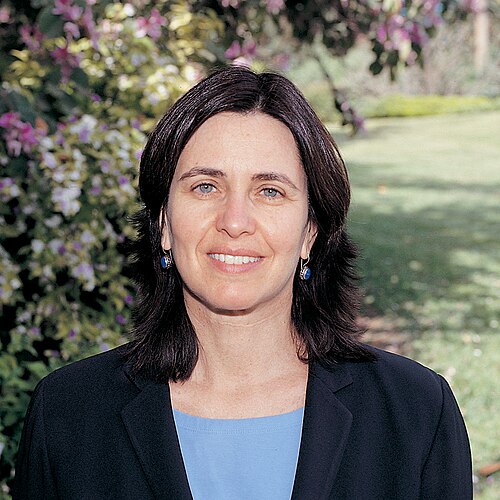
Shafi Goldwasser is an Israeli-American computer scientist whose research has transformed modern cryptography and theoretical computer science.
Much of her work examines how information can be protected and verified without unnecessarily revealing the information itself. Along with Silvio Micali and Charles Rackoff, she helped develop the concept of zero-knowledge proofs.
Zero-knowledge systems allow one party to demonstrate that something is true without revealing the underlying secret information. Goldwasser’s research has influenced cryptography, cybersecurity, and computational complexity. She shared the 2012 A.M. Turing Award with Silvio Micali.
11. Fei-Fei Li (1976– )
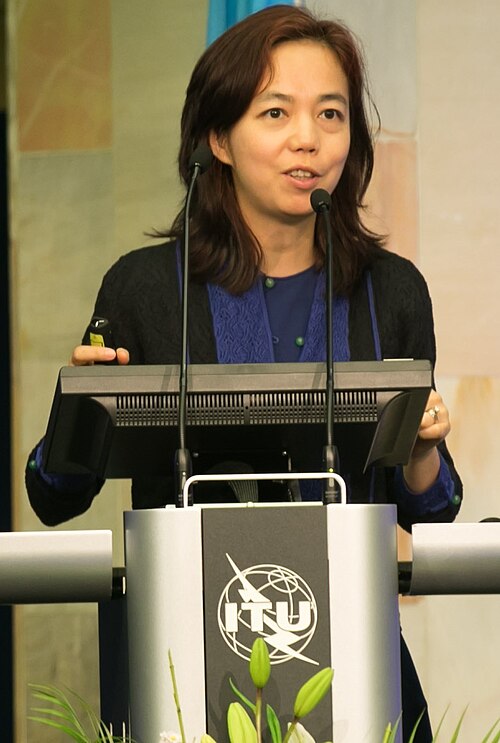
Fei-Fei Li is a Chinese-American computer scientist whose research has played an important role in the development of modern artificial intelligence and computer vision.
She is particularly well known for leading the creation of ImageNet, a massive database containing millions of labeled images. The project gave researchers a large standardized dataset for training and evaluating computer vision systems.
ImageNet became especially influential during the rise of deep learning in the 2010s, when neural networks achieved major improvements in image recognition. Li has also advocated for human-centered artificial intelligence and greater diversity within the technology industry.
12. Anita Borg (1949–2003)
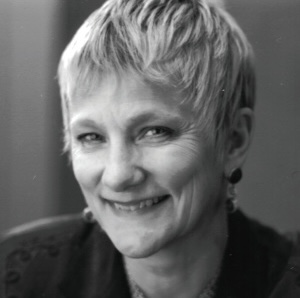
Anita Borg was an American computer scientist who combined technical work with a major commitment to increasing women’s participation in computing.
Borg worked for several technology companies and research organizations, including Digital Equipment Corporation. Her technical interests included operating systems and computer networking.
She later founded organizations and communities designed to connect and support women working in technology. In 1994, she helped establish the Grace Hopper Celebration of Women in Computing, which grew into a major gathering for women and nonbinary technologists. The organization she founded later became AnitaB.org.
13. Mary Kenneth Keller (1913–1985)
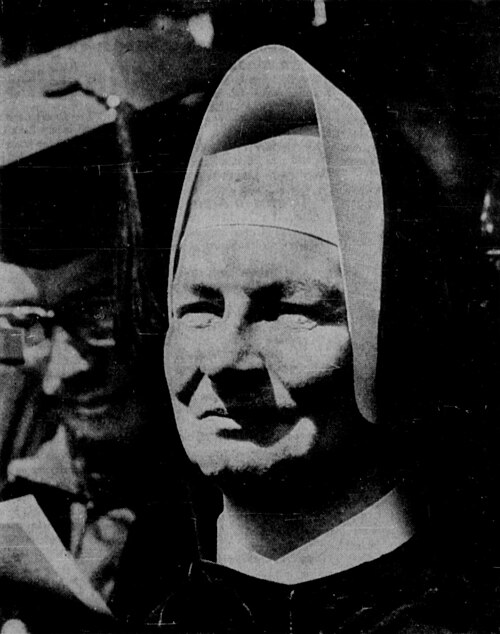
Mary Kenneth Keller was an American computer scientist, educator, and Catholic religious sister who became an important figure in early computer science education.
In 1965, Keller earned a PhD in computer science from the University of Wisconsin–Madison. She is generally recognized as the first woman in the United States to earn a doctorate in computer science, receiving it during the same year that Irving C. Tang earned one of the country’s earliest computer science doctorates.
Keller later helped establish a computer science department at Clarke College in Iowa and spent many years teaching there. She believed computers could become powerful educational tools and worked to make computing knowledge accessible to a wider range of students.